




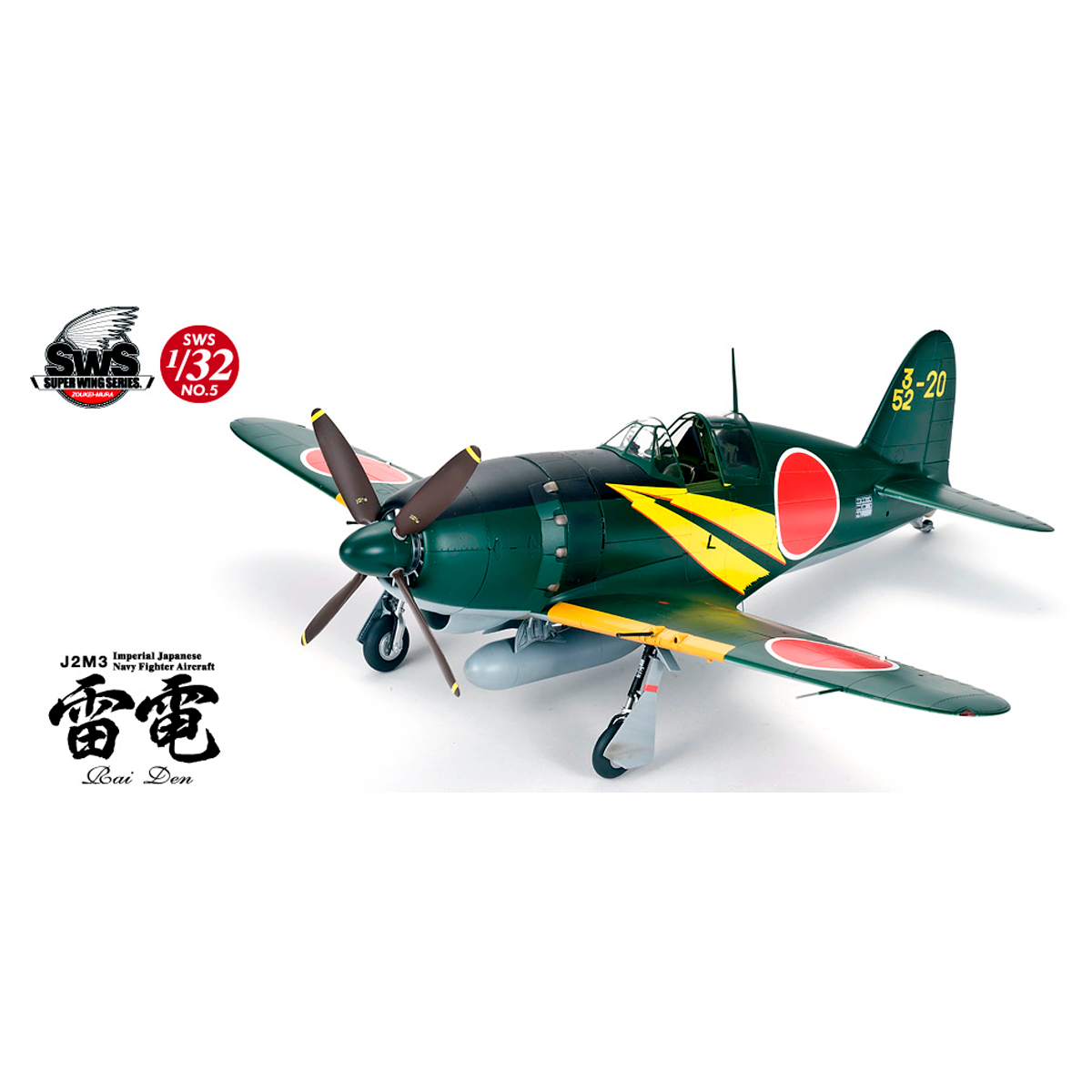


1/32 J2M3 IMPERIAL JAPANESE NAVY FIGTHER
119,95€
Hay existencias

*Please check our Privacy Policies to see how to we use your personal data.
*Por favor revisa nuestra Política de Privacidad para ver como tratamos tus datos personales
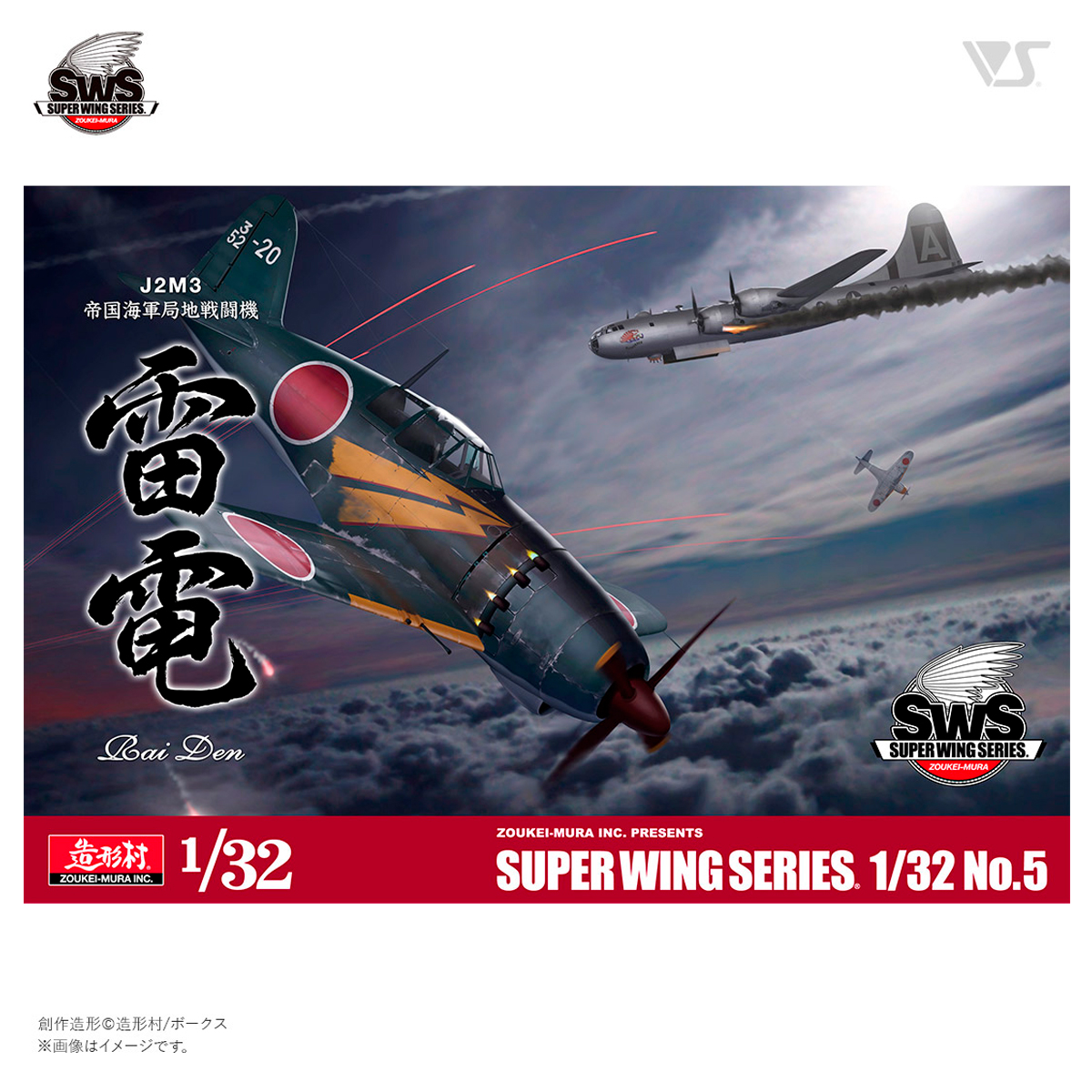
Zoukei-Mura 1/32 J2M3 IMPERIAL JAPANESE NAVY FIGTHER
Finally, the ultimate Raiden!
Witness the truth of the proud interceptor, the last line of defense for the imperial capital!
The Raiden was an interceptor designed to prioritize climbing performance and firepower at the expense of flight range and dog-fight capabilities.
What was the solution that Dr. Horikoshi adopted to solve the enigma that arose from the Navy demanding a high speed interceptor while also incorporating the un-aero dynamic large diameter engine?
As for the structural design of the shell, Dr. Horikoshi had extended the nose so as to reduce air resistance by creating a smooth streamlining form. He sought to surpass the climb performance of enemy aircraft by reducing the weight of the Raiden as much as possible.
Such innovations can be said to be specific to the Japanese, and as a result this infamous plane was born.
Every aspect of this aircraft shall be revealed through the SWS kit, developed as a result of exhaustive research and tireless development.
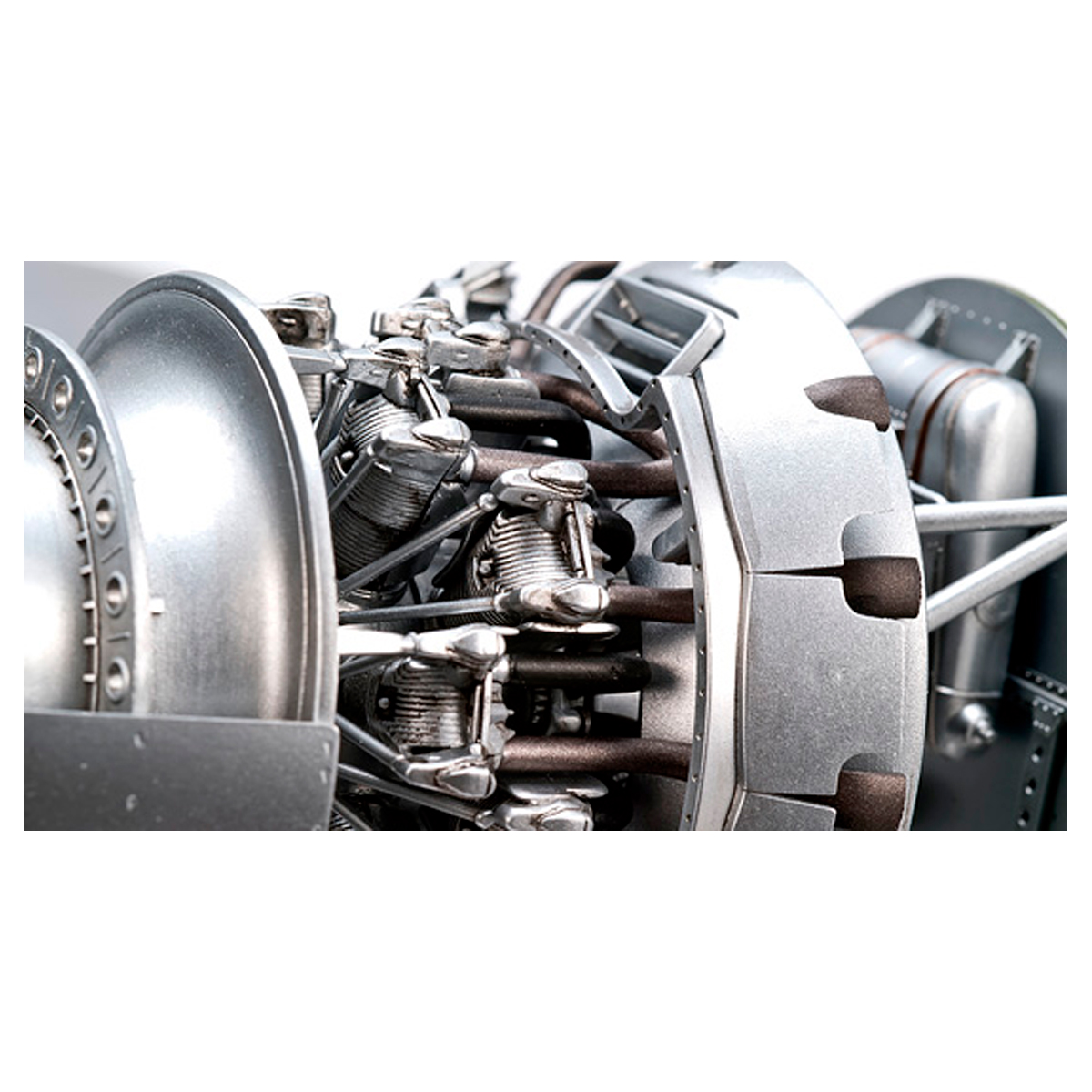
Pay attention to the powerful Mitsubishi «Kasei 23a engine»!
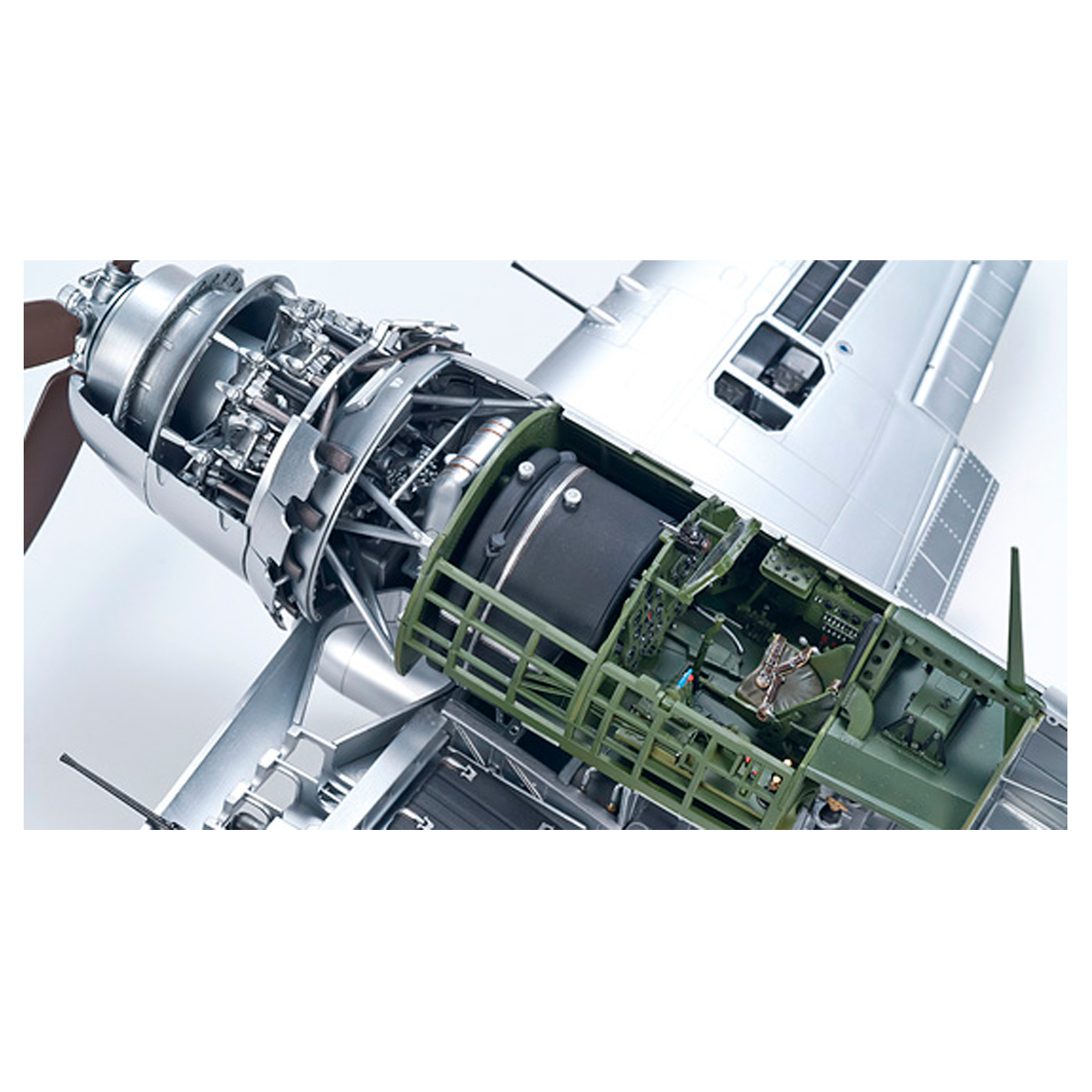
The powerful Mitsubishi «Kasei 23a engine» lies at the base of the spindle shaped fuselage; detailed characteristics of the engine, including the extension drive shaft and cooling fan are all recreated in great detail!
Please thoroughly enjoy the structural composition of a real airplane; for it is only available with the SWS kits.
Can you see the baffle plates that run along the sides of each cylinder? The function of this essential part is to divert the heat from the front line of cylinders and increase the cooling efficiency of the back line cylinders in this radial-shaped, air-cooled engine. The baffle plates don’t stand out, but SWS kits have never failed to recreate these parts with any of their releases.
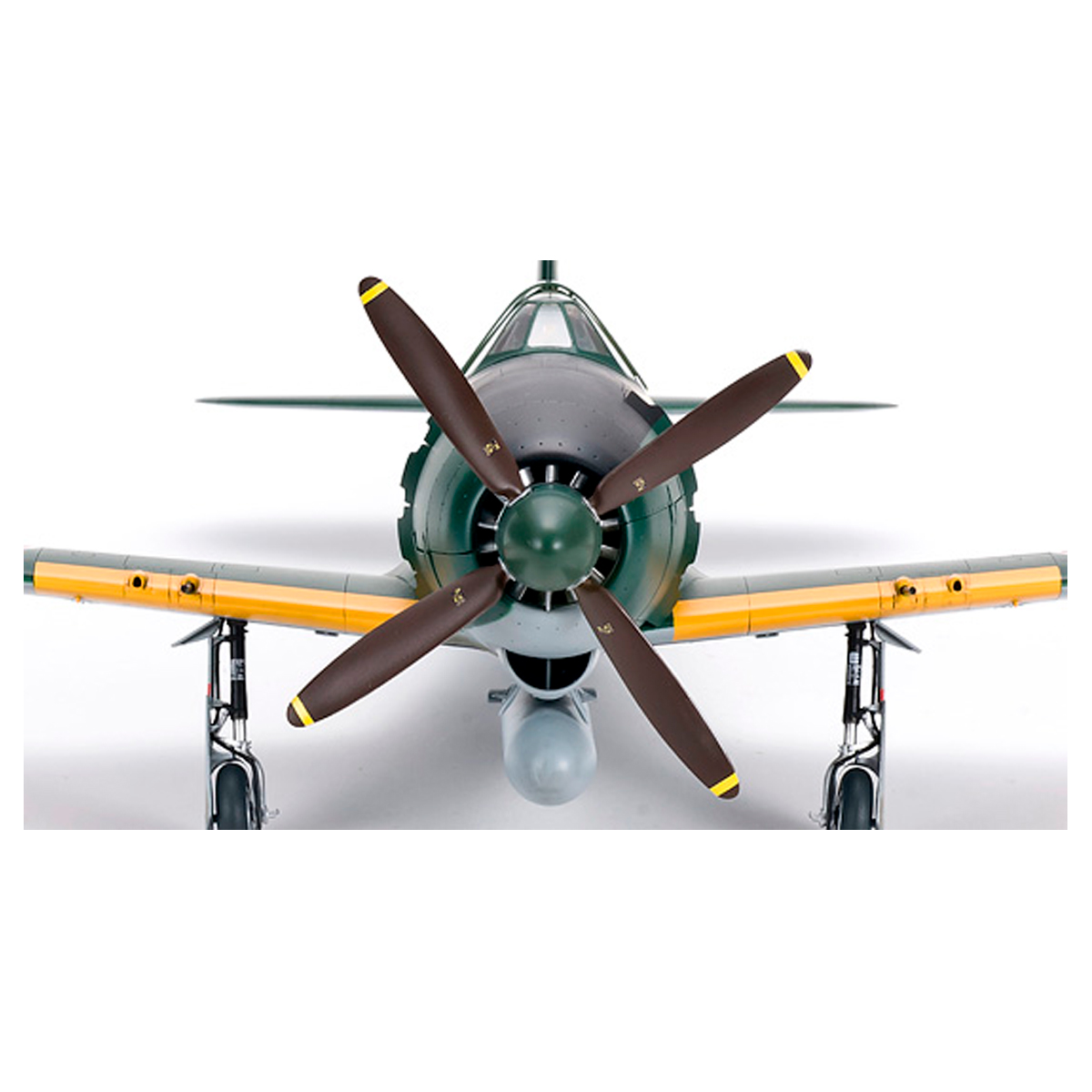
When one thinks of the Raiden, the notion that comes to mind is «the defense of the Imperial Capital.» It stood courageously as it was deployed to defend our nation’s capital. Complete with its wide blade propellers, designed to fly at ultra-high altitudes, this SWS kit was made possible by exhaustively researching the last remaining aircraft of its species.
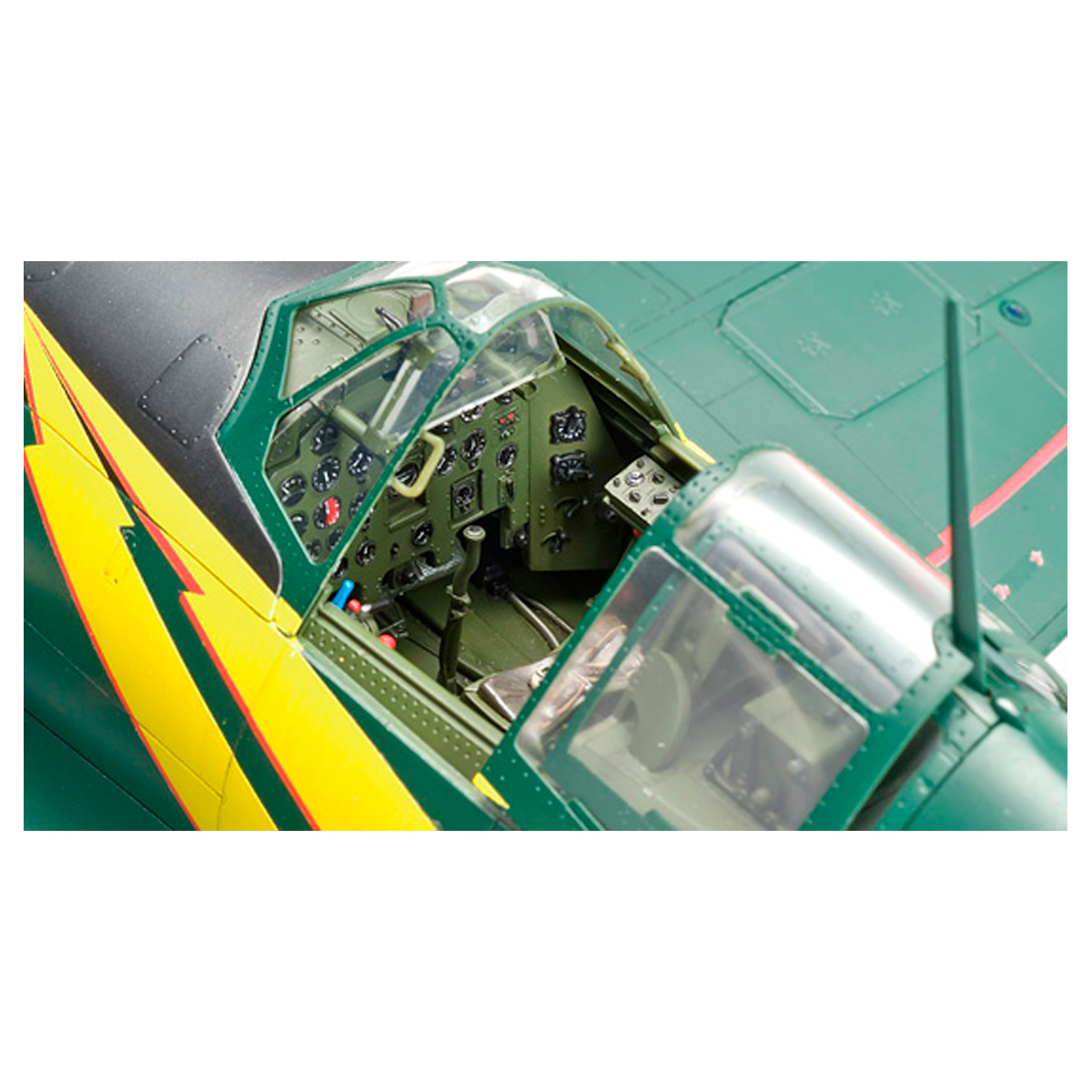
The model is conveniently designed such that the assembly work-load is reduced by the unification of the instruments and chords that are integrated into the ribs at the sides of the cockpit. One can almost imagine the feelings of the pilots of that time when looking at the operating mechanisms condensed and recreated at 1/32 of the original size.
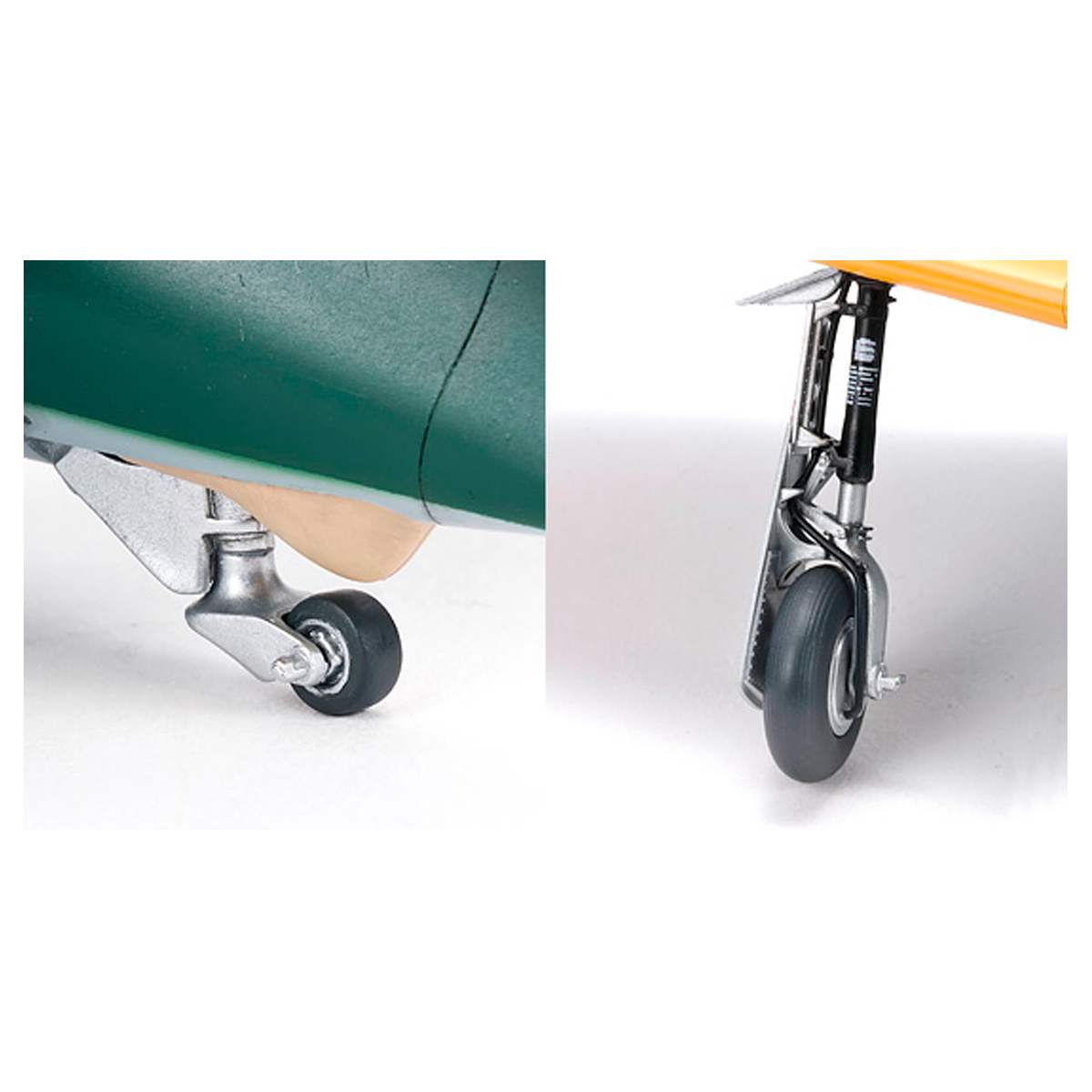
The landing gears that supported the Raiden, powered by the powerful Kasei engine, would withstand taking off from even the most uneven grounds at full speed. It would charge at full throttle straight toward enemy bombers.
Unlike most other Japanese aircraft, the landing gear mechanism was powered by electricity.
It is a mark of SWS kits that one is able to observe even the minutest details of an aircraft’s structural design.
Another mark of the SWS kit is the thoughtful design in which all one needs to do is to fit the landing gear piece into the fuselage to have it assume landing position at the correct angle!
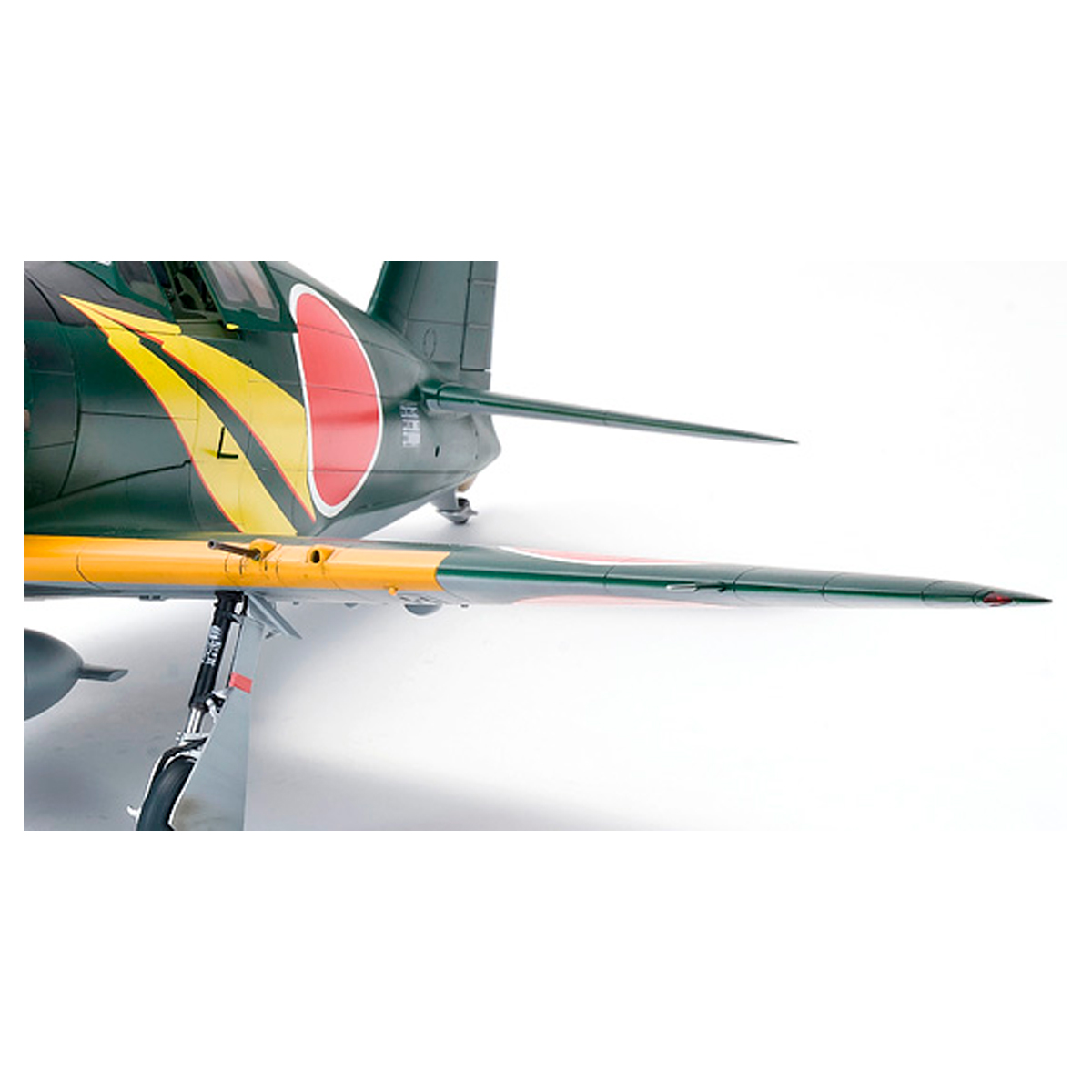
When one observes the wings designed by Dr. Horikoshi, one can see a «bend» in the angle toward the front edge. When seen from the front, one sees a beautiful curve reminiscent of that of the Zero. Such detailed designs were typical to Japanese aircraft of the time.
For the first time ever the details of the internal structure of the Raiden, the supreme interceptor of Imperial Japan, are thoroughly recreated through exhaustive research performed on the last remaining Raiden at the Planes of Fame Museum in Chino, USA. We have renewed almost every aspect of the die cast in order to recreate the SWS kit as realistically as possible!
Most of the significant components and mechanisms are fitted into the front half of the spindle shaped fuselage. We hope you take note of and appreciate the roomy cockpit and various control rods that run along the nearly empty rear half of the fuselage as well.
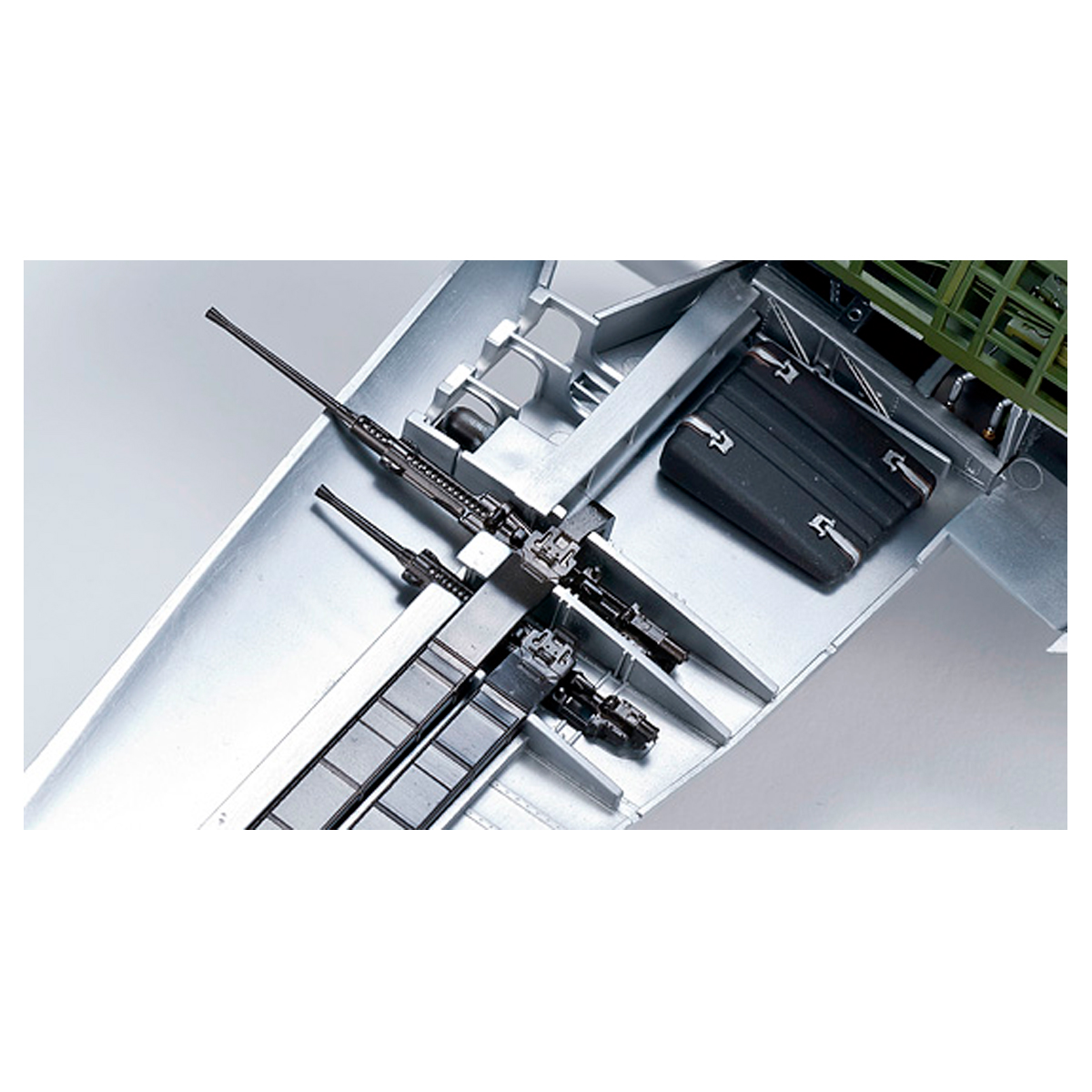
Since the Raiden Type-21 was a high altitude interceptor, it was fitted with four 20 mm machine guns to perform devastating hit and runs against invading enemy bombers.
Of the two sets of guns on each wing, the Type 99-2 model 4 20mm complete with 210 rounds in the magazine were mounted on the inner side, and the Type 99-1 model 4 20mm gun was mounted on the outside with a 190 round magazine.ç
It goes without saying that the shell of the aircraft was designed for the purpose of flight. All aspects of the exterior design are the products of this basic purpose and the necessities that arise from the aircraft’s internal structure.
This kit magnificently recreates the spindle shaped shell specific to the Raiden.
It successfully recreates the engine cowls that contain the extension shaft, the lines of the «inflated» lower fuselage, the curves of the rounded upper fuselage that extends from the canopy to the empennage, and the uniquely large fillet portion.
Zoukei-Mura 1/32 J2M3 IMPERIAL JAPANESE NAVY FIGTHER
¡Por fin, el Raiden definitivo!
¡Sé testigo de la verdad del orgulloso interceptor, la última línea de defensa de la capital imperial!
El Raiden fue un interceptor diseñado para priorizar el rendimiento de ascenso y la potencia de fuego, sacrificando el alcance de vuelo y la capacidad de combate cerrado.
¿Cuál fue la solución que el Dr. Horikoshi adoptó para resolver el enigma que surgió cuando la Marina exigía un interceptor de alta velocidad que además incorporara un motor de gran diámetro poco aerodinámico?
En cuanto al diseño estructural del fuselaje, el Dr. Horikoshi alargó el morro para reducir la resistencia del aire, creando una forma aerodinámica suave. Buscó superar el rendimiento de ascenso de los aviones enemigos reduciendo el peso del Raiden tanto como fuera posible.
Estas innovaciones pueden considerarse propias del ingenio japonés, y como resultado nació este famoso avión.
Cada aspecto de esta aeronave se revela a través del kit SWS, desarrollado gracias a una investigación exhaustiva y un desarrollo incansable.
¡Presta atención al potente motor Mitsubishi “Kasei 23a”!
El potente motor Mitsubishi “Kasei 23a” se encuentra en la base del fuselaje con forma de huso; las características detalladas del motor, incluyendo el eje de transmisión extendido y el ventilador de refrigeración, han sido recreadas con gran precisión.
Disfruta plenamente de la composición estructural de un avión real; algo que solo está disponible en los kits SWS.
¿Puedes ver las placas deflectoras que recorren los lados de cada cilindro? La función de esta pieza esencial es desviar el calor de la fila frontal de cilindros y aumentar la eficiencia de refrigeración de la fila trasera en este motor radial refrigerado por aire. Puede que estas placas no destaquen, pero los kits SWS nunca han dejado de reproducir estos detalles en ninguno de sus lanzamientos.
Cuando uno piensa en el Raiden, viene a la mente la idea de “la defensa de la capital imperial”. Se mantuvo valiente mientras era desplegado para proteger la capital de la nación. Equipado con hélices de palas anchas, diseñadas para volar a altitudes ultra elevadas, este kit SWS fue posible gracias a una investigación exhaustiva del último ejemplar existente de este avión.
El modelo está diseñado de manera conveniente, de modo que la carga de montaje se reduce mediante la unificación de los instrumentos y cables integrados en las costillas a los lados de la cabina. Uno casi puede imaginar los sentimientos de los pilotos de aquella época al observar los mecanismos de operación condensados y recreados a escala 1/32.
El tren de aterrizaje que sostenía al Raiden, impulsado por el potente motor Kasei, podía soportar despegues incluso en terrenos irregulares a máxima velocidad. Avanzaba a toda potencia directamente hacia los bombarderos enemigos.
A diferencia de la mayoría de los aviones japoneses, el mecanismo del tren de aterrizaje era accionado eléctricamente.
Es una característica distintiva de los kits SWS que se puedan observar incluso los detalles más minuciosos del diseño estructural de una aeronave.
Otra característica es su diseño considerado, en el que basta con encajar la pieza del tren de aterrizaje en el fuselaje para que adopte la posición correcta con el ángulo adecuado.
Al observar las alas diseñadas por el Dr. Horikoshi, se puede apreciar una “curvatura” en el ángulo hacia el borde delantero. Vistas desde el frente, muestran una elegante curva que recuerda a la del Zero. Este tipo de detalles eran característicos de los aviones japoneses de la época.
Por primera vez, los detalles de la estructura interna del Raiden, el interceptor supremo del Japón Imperial, han sido recreados minuciosamente gracias a una investigación exhaustiva realizada sobre el último Raiden conservado en el Planes of Fame Museum en Chino, Estados Unidos. Hemos renovado casi todos los aspectos del molde para reproducir el kit SWS de la forma más realista posible.
La mayoría de los componentes y mecanismos importantes están ubicados en la mitad delantera del fuselaje con forma de huso. Esperamos que también aprecies la espaciosa cabina y las diversas varillas de control que recorren la casi vacía mitad trasera del fuselaje.
Dado que el Raiden Tipo-21 era un interceptor de gran altitud, estaba equipado con cuatro cañones de 20 mm para realizar devastadores ataques rápidos contra bombarderos enemigos.
De los dos conjuntos de armas en cada ala, el modelo Tipo 99-2 modelo 4 de 20 mm con 210 proyectiles se montaba en el lado interior, mientras que el Tipo 99-1 modelo 4 de 20 mm se colocaba en el exterior con un cargador de 190 proyectiles.
Como es lógico, el fuselaje del avión fue diseñado con el propósito del vuelo. Todos los aspectos de su diseño exterior son el resultado de esta finalidad básica y de las necesidades derivadas de su estructura interna.
Este kit recrea magníficamente el fuselaje en forma de huso característico del Raiden.
Reproduce con éxito las cubiertas del motor que albergan el eje extendido, las líneas del fuselaje inferior “inflado”, las curvas del fuselaje superior redondeado que se extiende desde la cabina hasta la cola, y la sección de unión de gran tamaño tan particular.

 Solicitud de ficha producto tipo SDS / Seguridad de producto